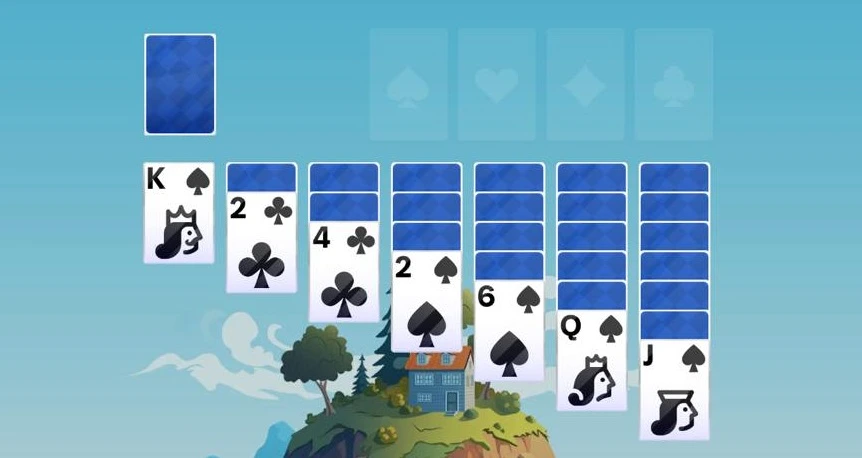


Spider Solitaire Rules: How to Play, Set Up & Win (Complete Guide)

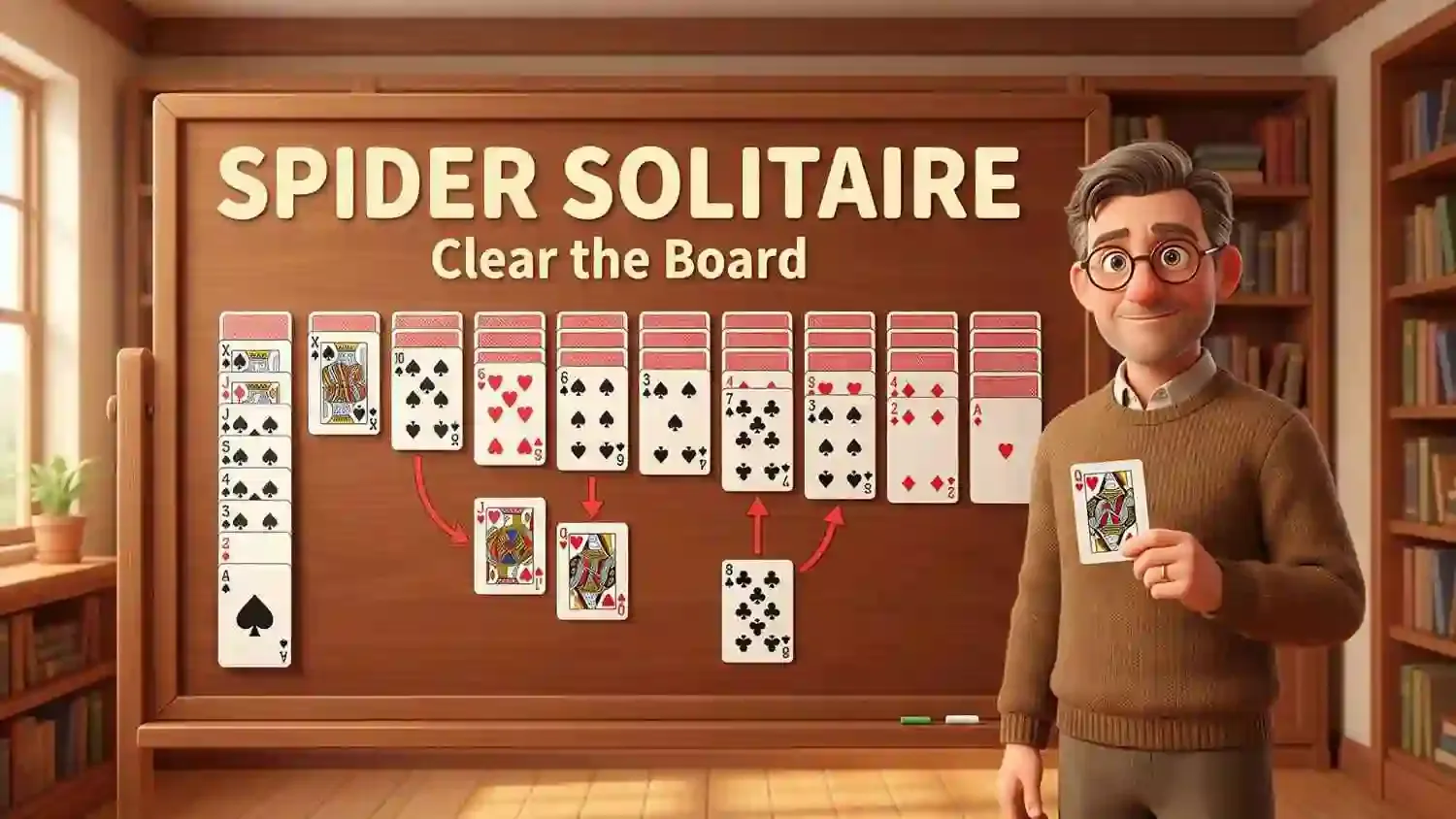
Spider Solitaire is played with two standard 104-card decks. The game begins with 54 cards dealt across 10 tableau columns, leaving a stockpile of 50 cards to be drawn 10 at a time when moves are exhausted.
The primary goal is to arrange cards in descending order from King to Ace. While you can stack cards of any suit in descending order to clear space, you can only move multiple card groups if they belong to the same suit. Once a complete same-suit sequence from King to Ace is formed, it automatically clears the board. Empty columns are highly valuable and can be filled with any available card or valid sequence.
Just like the name Spider Solitaire, you need to spread out your webs around the deck to look for the best opportunity to win the game, and you need to be more patient while playing this variation, which you can play solitaire online.
FAQs
- Two complete decks equal 104 cards total. This gives you enough cards to build eight complete sequences (one for each suit pair).
- Keep it simple: move cards down (King to Queen to Jack, etc.), use same-suit sequences for foundation, move only face-up cards, and deal from stock only when all columns have a card. That's it.
- Start with a one suit. You'll actually win games and learn strategy. Move to two suits once you're comfortable. Try four-suit when you want maximum challenge.
- Yes, way harder. Regular solitaire has about a 33% win rate. Spider's four-suit version has only 6%. Spider needs real strategy and forward planning. It's definitely the hardest solitaire games.
- Yes. You can place absolutely any card or any valid moving sequence into an empty space. This is a huge help compared to regular solitaire, where only Kings can fill an empty spot.
- On the hardest 4 suit mode, you will win about 1 out of every 3 games if you play perfectly. The easiest 1 suit mode has a very high win rate because nearly every game can be solved, while 2 suits sits right in the middle.
- Spider uses 2 decks and 10 columns, while regular solitaire uses 1 deck and 7 columns. In Spider, you clear full matching columns from King to Ace, you can put any card in empty spaces, and you deal new cards onto every column at once instead of using a waste pile.

Benefits of Solitaire: Boost Your Mind and Focus Today
Discover the benefits of Solitaire for brain health, focus, memory, and stress relief. Learn how this classic card game sharpens thinking and boosts mental clarity.

Is Every Solitaire Game Winnable? Discover the Truth Today
Uncover the history of Solitaire and trace its evolution from early card traditions to the iconic game enjoyed by millions today.

13 Types of Solitaire Games: The Ultimate Guide (With Rules, Variations & Tips)
Explore the different types of Solitaire games including Klondike, Spider, FreeCell, Pyramid, and more. Compare rules and find the version you enjoy most.

How Many Rows in Solitaire? The Complete Layout Explained
Mirrors your preferred declarative opening style, leading with a direct fact that immediately answers the query, then naturally weaves in related subtopics (card count, face-up pattern, layout setup) that match informational search intent. "Discover" adds a soft CTA without sounding promotional, and at 156 characters it sits cleanly within the 155–160 character display window.
Best Card Games for Seniors: 16 Fun Picks for All Skill Levels
Discover the 16 best card games for seniors, from easy solo classics like Solitaire to lively group favorites like UNO and Bridge, and find the perfect game for every skill level.